



Mayfly
Characteristic insects of aquatic ecosystems.
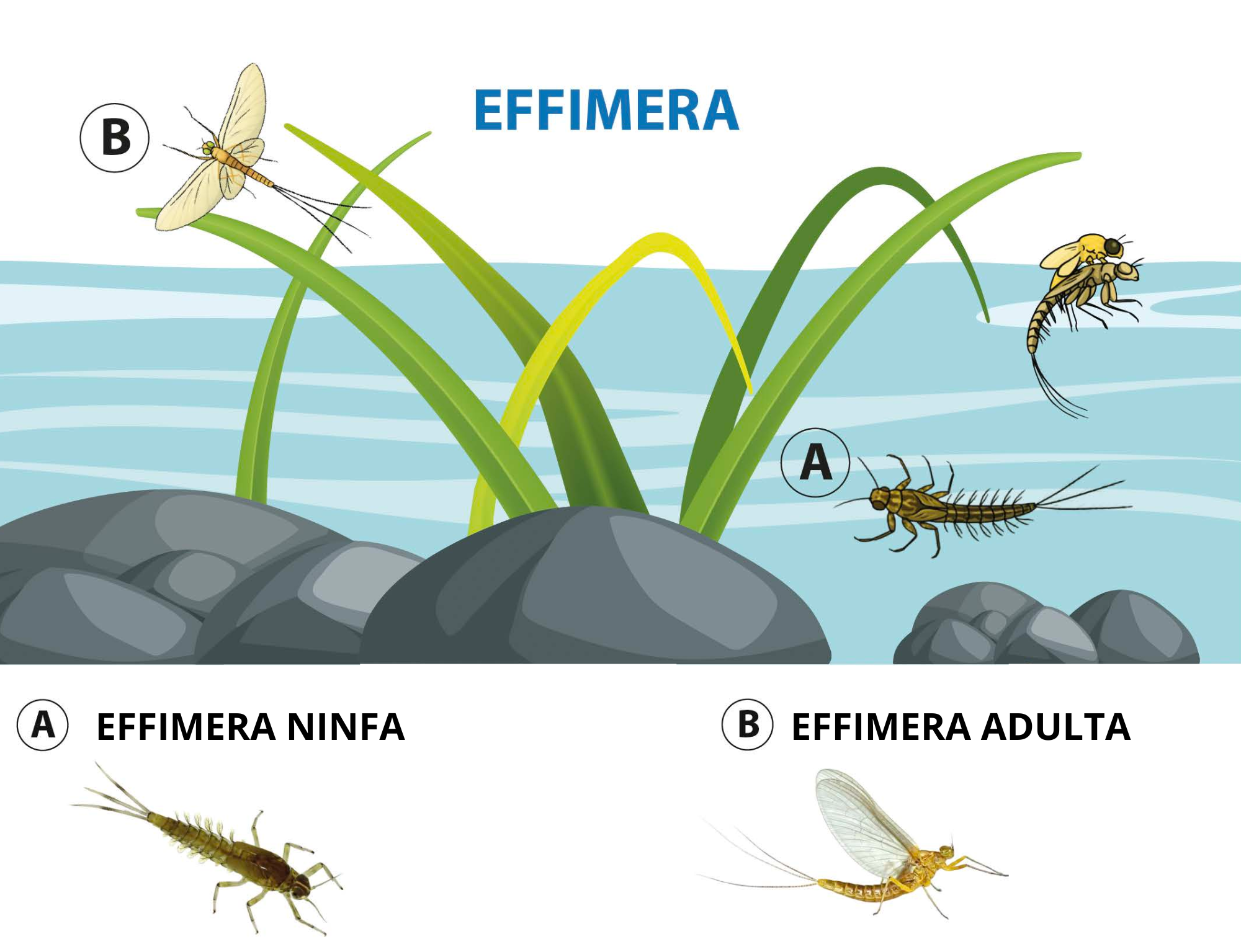
The meaning of the word ephemeral (mayfly) is literally given to something that lasts a short time. In fact, these insects, in their adult stage, never feed and live for a very short time—only a few hours. Just enough time to mate and lay eggs. The nymphs, however, which live constantly submerged in water, can live for up to two years. Both nymphs and adult insects, which fly near the water to lay eggs, are often food for the fish in our streams.
Plecoptera (Stoneflies)
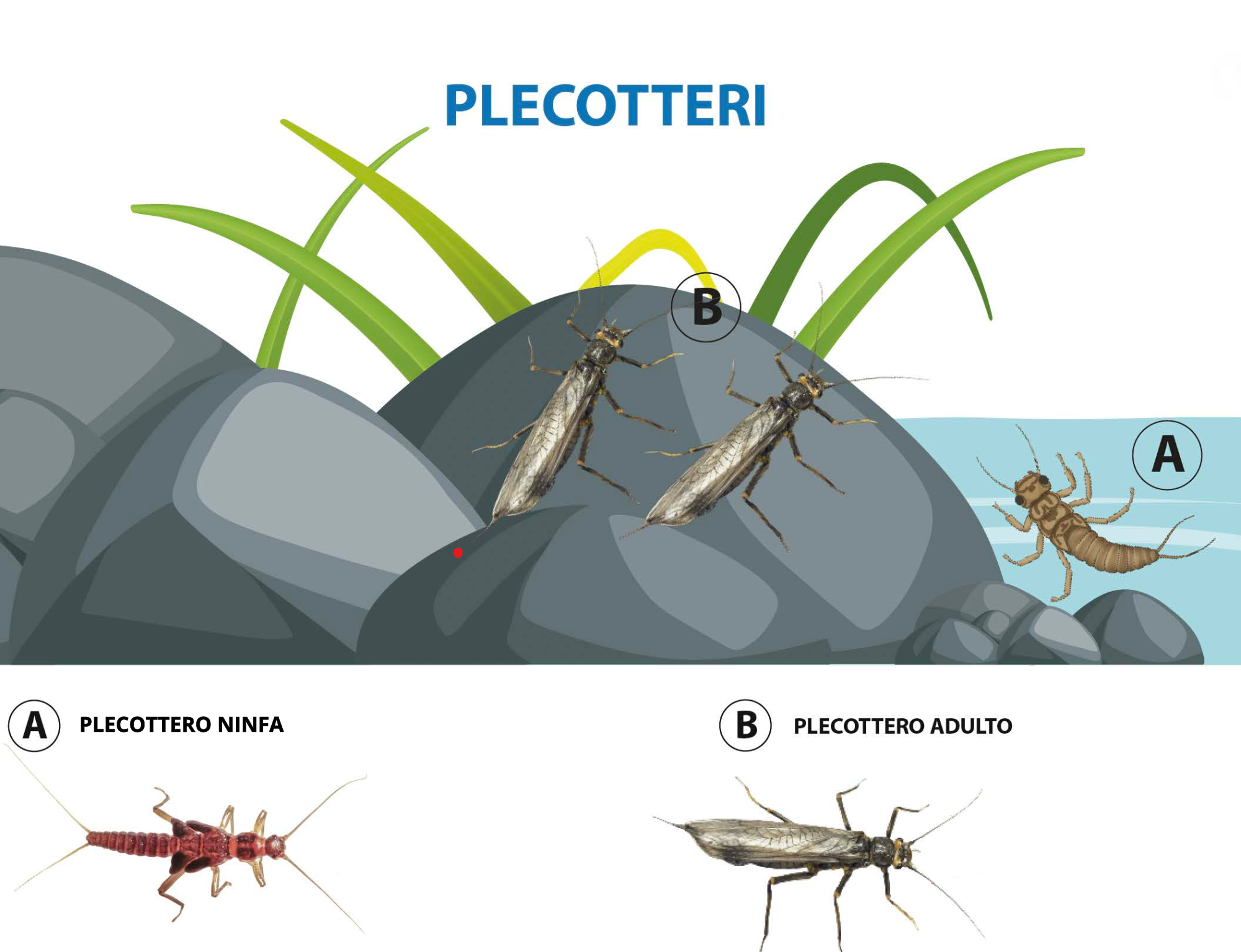
A common insect of aquatic ecosystems with pure water and rocky bottoms. It is also known as the “stonefly” because, unlike other insects that gain the water’s surface and take flight upon developing wings, these insects walk along the bottom and exit the water by climbing onto stones. It is not uncommon to find them all attached outside, on some boulder in the stream, drying their wings. For these insects as well, adult life lasts only from a few days to a few weeks—just enough time to complete mating and lay eggs.
Trichoptera (Caddisflies)
Insects very common in streams.
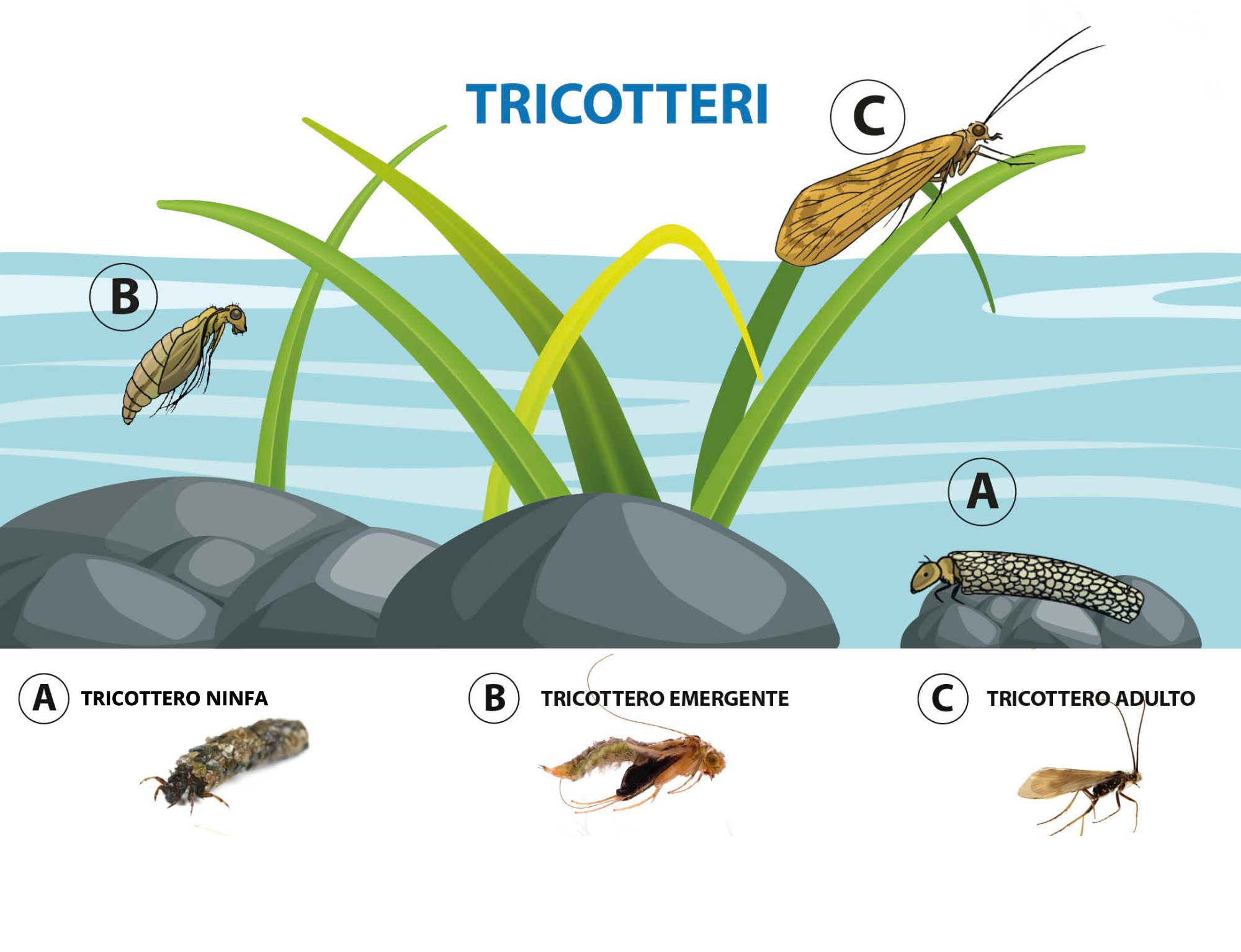
Also known as “cased caddis” because, in their initial life stage, some build a sort of cylindrical case around themselves, attached to the stones on the bottom, made of small pebbles or woody debris. When the nymph matures, it leaves the case and swims to the surface, unfolds its wings, and takes flight toward the shore. It is precisely during this phase that they often fall victim to hunting fish.
Diptera
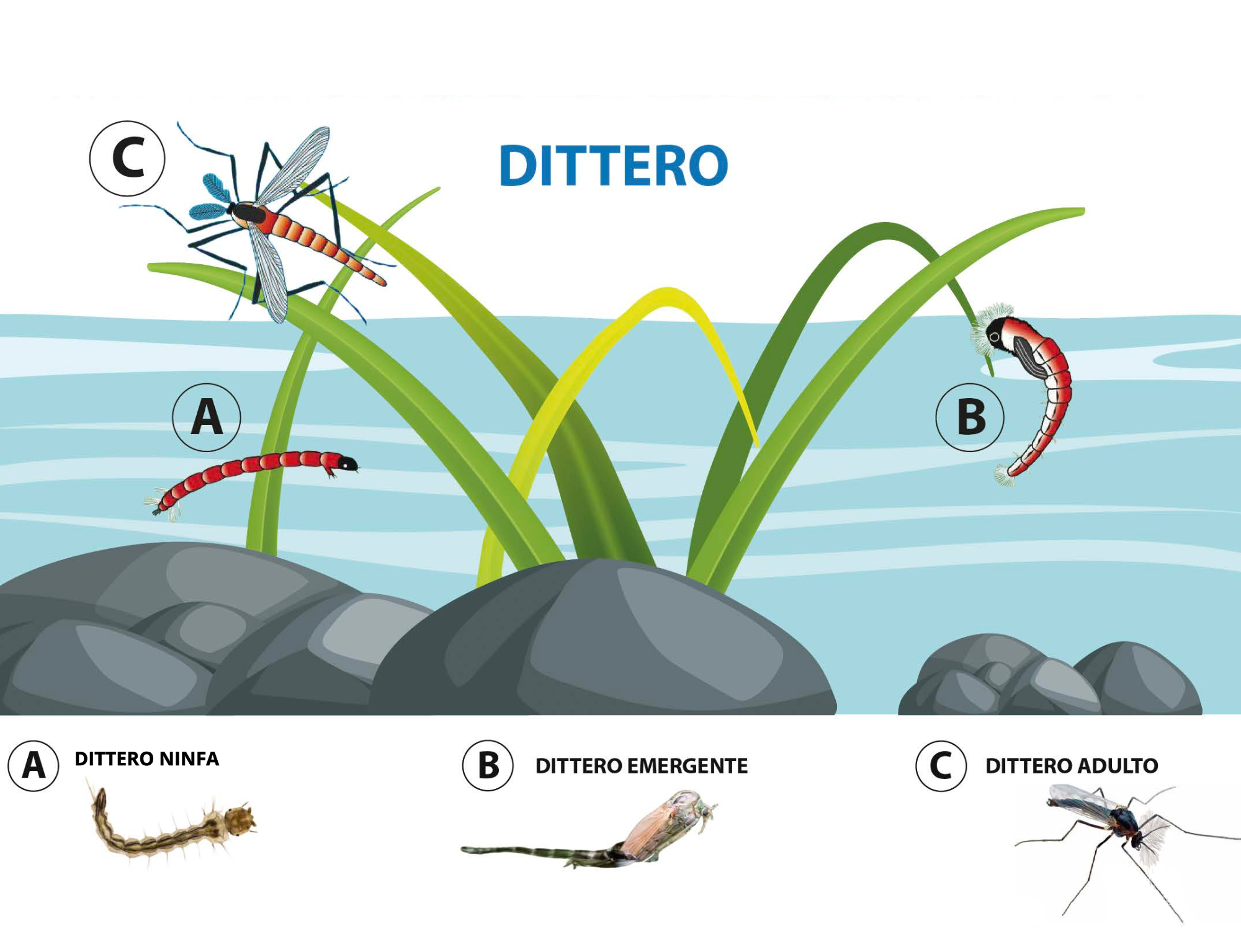
Diptera are insects, to which the mosquito also belongs, typical of streams with calmer waters and even muddy bottoms. The larvae grow in the silty bottom or attached to submerged vegetation. Upon maturing, they transform into pupae and, rising to the surface, then become the winged insects we often see in swarms along rivers.
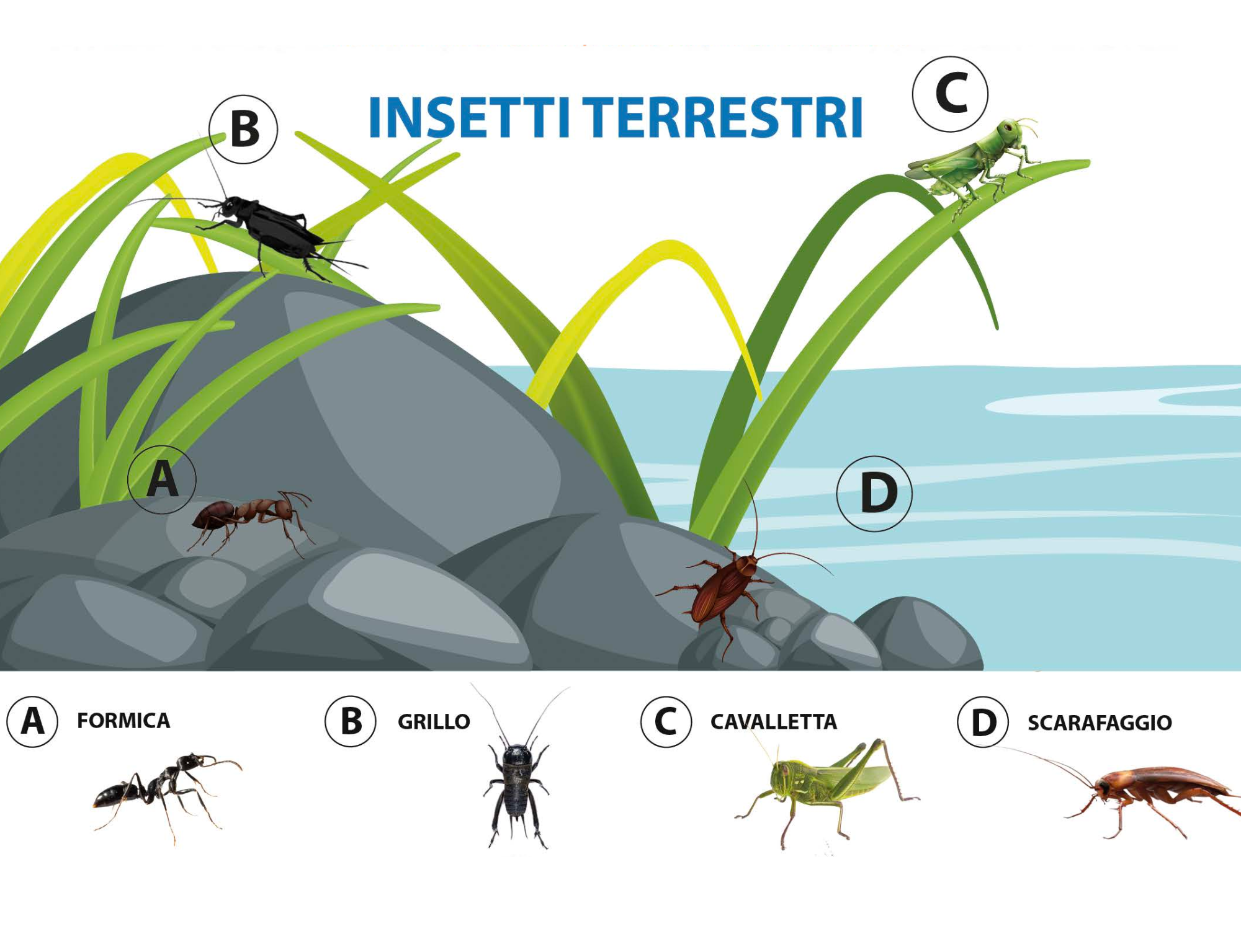
Terrestrial Insects
More than 300,000 species belong to this category.
Here we can see only some of those that are most important for fishing purposes because, living along watercourses, they often become a food source for fish when they fall in.

We would like to thank Massimiliano Pozza, Giorgio Nardi, Giovanni Nese, and Bruno Righetti — who recently passed away — for the kind permission to use some of their photos.